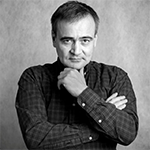
The fate of the rector of Kazan University
On May 28, 2025, the Savelovsky District Court of Moscow found proven the involvement of Ilshat Gafurov, former rector of Kazan University, former mayor of the Tatarstan city of Yelabuga, in the murder of businessman Aidar Israfilov. Gafurov was sentenced to 22 years in a high-security penal colony.
During the trial, prosecutor Milana Digaeva, describing the motives for the murder, referred to the investigation "Complex returns", published on October 3, 2012.
The defendant insisted that the publication could not be trusted, and he was not involved in the murder of Israfilov. But the court did not believe Gafurov and considered that the evidence of guilt of the former rector's involvement in the murder is more than enough. The criminal case, which was solved in hot pursuit back in September 1999, has come to an end.
Yelabuga businessman Aidar Israfilov was killed in Moscow on August 28, 1999 in a parking lot near the market located in the CSKA sports complex on Leningradsky Prospekt.
A man in a white jacket and baseball cap jumped out of a parked VAZ-2106 and shot Israfilov at point-blank range, firing four shots from a pistol in front of dozens of people. After completing the job, the killer jumped into the car and sped off. An hour later, " six "was found near the hotel "Aerostar". The killer left the silenced pistol in the car.
Israfilov was not only a successful businessman, co-owner of the largest market in Yelabuga, opened in the former parking lot of ELAZ cars, but also a deputy of the Yelabuga Council of People's Deputies. Therefore, serious efforts were made to solve the crime.
Meanwhile, a few weeks before this incident, a 22-year-old militant of the organized criminal group "29th complex" Igor Kulyasov was detained in Yelabuga for preparing an attempt on Israfilov's life. The fact is that, having received the order, the killer came to Israfilov and offered to pay off. Kulyasov called both the name of the customer and the amount-20 thousand dollars-already received for the work. Israfilov did not pay off, but went to local television and told the whole of Yelabuga that an attempt was being prepared on his life.
At Israfilov's request, the prosecutor's office opened a criminal case. However, there was not a word about the customer in it. Once in the temporary detention center, Kulyasov fell silent. Since the killer voluntarily renounced the crime, the case was dropped, and Kulyasov was released. But on August 28, another killer completed the already paid work.
In September 1999, NTV broadcast a report about the murder of Aidar Israfilov. Once again, the whole country was told that Ilshat Gafurov, the mayor of Yelabuga at that time, had ordered the murder.
This was reported on NTV by an anonymous operative of the 6th department of the Yelabuga district police department, who spoke with a changed voice and covered face. The Ministry of Internal Affairs of Tatarstan quickly identified the operative. It turned out to be Vladimir Gorshkov.
The management scolded the officer, but did not impose any sanctions for leaking operational information. Gorshkov continued to work, and in 2001 he retired. 11 years later, in 2019, while collecting materials for the Complex Returns investigation, I was on a business trip to Tatarstan, passing Yelabuga, Naberezhnye Chelny, and Kazan. I also met with former opera director Vladimir Gorshkov. He did not retract what he said on NTV in 1999.
Meanwhile, Israfilov's murder was solved in September 1999. The killer was identified and put on the wanted list. But he managed to leave Russia. Security forces spread information that the murdered businessman and deputy had a conflict with the organized criminal group "29th complex". However, they did not search for the organizer and customers of the murder.
Why, in 1999, did the investigators not even consider the version voiced during the lifetime of Israfilov himself and opera Gorshkov?
In 2012, during a business trip to Tatarstan, I asked this question to the prosecutor of the republic Kafil Amirov – who was also a prosecutor in 1999. And he honestly replied that it was a politically motivated decision. They say that the Moscow prosecutor's office was investigating Israfilov's murder, because the murder was committed there. Just a week after the crime was committed, Amirov wrote a letter to Moscow Prosecutor Sergei Gerasimov, in which he drew the attention of his Moscow colleague to both Israfilov's warning and Gorshkov's operational information.
But in the fall of 1999, the Duma election campaign was in full swing and the peak of the confrontation between the Luzhkov-Shaimiev block "Fatherland – All Russia" and "Unity" under the leadership of Shoigu.
I repeat, Aidar Israfilov was shot in Moscow on August 29, 1999. It was Sunday. And the day before, on Saturday, a congress was held there in Moscow, during which Luzhkov's Fatherland party merged with the All Russia bloc of leaders of a number of Russian regions. This is how the "Fatherland – All Russia" electoral bloc was formed.
The head of Tatarstan, Mintimer Shaimiev, also participated in the work of the founding congress of this bloc. On the same day, August 28, he returned to Kazan and right at the airport declared that "Fatherland – All Russia" is claiming a majority in the State Duma. And this Shaimiev statement was shown even by federal channels.
Excerpt from the Channel 1 report with the participation of Mintimer Shaimiev (1999):
Everything and everything is already discussed. The Unification Congress has taken place, the positions are clear, and the program has been adopted. So it remains to vote, get a Duma majority-that's all.
But the Fatherland – All Russia bloc failed to win a majority in the State Duma. The block got a little more than 13% of the vote, because the"Dorenko factor" worked.
Sergey Dorenko every Sunday furiously and talented "soaked" "Fatherland-All of Russia". The bloc's co – chairs, former Prime Minister Yevgeny Primakov and Moscow Mayor Yuri Luzhkov, were particularly hard hit.
Sergey Darenko did not notice Mintimer Shaimiev. And not only because the head of Tatarstan was not on the pre-election list of deputies from the OVR, registered on September 4, 1999 – but much more importantly, there were no reasons.
Now imagine what kind of orgy Dorenko's program would have started if a man from Shaimiev's team, one of the founders of the Fatherland – All Russia bloc, had been sent to a prison cell on suspicion of involvement in the murder. Most likely, the IAD would have lost another couple of percent of the vote. After all, the recognition of the block was largely based on the authority of the head of Tatarstan, Mintimer Shaimiev. In short, Moscow Prosecutor Sergei Gerasimov, who is close to Moscow Mayor Yuri Luzhkov, did not notice Kafil Amirov's letter.
In 2012, during our meeting, the Prosecutor of Tatarstan Kafil Amirov showed me a copy of a letter that he sent to the prosecutor of Moscow in September 1999. I assured him that if Ilshat Gafurov filed a lawsuit for protection of his honor and dignity after my publication, he would be ready to act as a witness. In 2012, Gafurov did not sue me and the newspaper.
Meanwhile, in the investigation "The Complex returns",published in the fall of 2012, I recalled that shortly before his death, Israfilov also publicly announced his plans to run in the same district with Gafurov in the elections of deputies of the State Council of Tatarstan of the second convocation scheduled for December 19, 1999. In those years, the heads of administrations of cities and districts of Tatarstan passed through the sieve of elections to the Republican Parliament and only after receiving a deputy mandate could they be appointed to the post of head of the local administration. Israfilov's election victory could put an end to Gafurov's career.
I will assume that this could be one of the motives for the murder of Israfilov. Gafurov, after eliminating a serious opponent in the elections in December 1999, calmly extended both the deputy mandate and the certificate of mayor of Elabuga. And Gafurov's fate turned out so that he worked as mayor of Yelabuga for another 10 years, and in April 2010 he was appointed rector of Kazan University. He worked in this position for almost 11 years.
Part c of the investigation "Complex returns" about possible motives for the murder of Israfilov, published, I repeat, in 2012, and referred to the state prosecutor Milana Digaeva during the debate in the Savelovsky District Court of Moscow. But if Ilshat Gafurov had repented immediately after this publication, back in 2012, and turned himself in, I think then, in 2012, he would have received 5-6 years in a penal colony and would have been released long ago.
I can't help but say something else. Tatarstan has become a unique Russian region, because, in addition to Gafurov, two other district heads have become defendants in criminal cases involving the murder of political opponents.
In February 2022, the Privolzhsky District Court of Kazan sentenced the former head of the Buinsky district administration of Tatarstan, Aglyam Sadretdinov, to eight years in a high-security penal colony. Sadretdinov had already been promoted, workedas Tatarstan's Minister of Ecology, and was arrested for a crime committed on July 3, 2003, when a political activist, an assistant to State Duma deputy Rashid Sadykov, was shot in the courtyard of his house. It follows from the verdict of the court that it was Aglyam Sadretdinov who ordered the activist who sharply criticized the head of the district, who paid 180 thousand rubles as a hitman.
The former head of the administration of the Agryzsky district of Tatarstan, Rustam Zakirov, was also sentenced to 17 years in a high-security penal colony for involvement in the murder. However, by the time the liquidation order was issued, Zakirov no longer worked as the head of the district administration, but ordered his replacement Rafis Saetov, who was appointed to the post after Zakirov's dismissal. Zakirov gave the killer 270 thousand rubles and paid all current expenses. On August 30, 2002, Rafis Saetov was shot.
But back to Ilshat Gafurov. He was arrested on December 21, 2021. He was detained in Kazan by operatives of the Central Department of the FSB. On the same day, Gafurov was taken to Moscow. Soon after Gafurov's arrest, a powerful information campaign was launched in support of him. The Internet is flooded with videos about how much Gafurov did for the development of Kazan University, as its rector, how he was a confidant of Vladimir Putin in the presidential election in March 2012, that he was awarded the Order of Friendship and the highest Order of Tatarstan "Duslyk".
State Duma deputies and senators wrote letters in support of Gafurov. But all this didn't help. Most likely, Moscow decided to loudly remind that everyone has their own skeletons in the closet, for which sooner or later they will have to answer.
The Savelovsky court of Moscow had the opportunity to announce the sentence of 22 years in prison and release Gafurov from serving his sentence due to the expiration of the statute of limitations. But this is a right of the court, not an obligation. Federal Judge Olga Chistova did not exercise this right.
However, it is possible that the former rector of Kazan University and the former mayor of Yelabuga will be released from serving his sentence by the Moscow City Court during the consideration of the appeal.
I must admit, in my opinion, it would be fair if the Moscow City Court released Ilshat Gafurov from the need to serve all 22 years of imprisonment. He has been in a prison cell for three and a half years. The principle of the inevitability of punishment has already been implemented. I think it's too late to correct Gafurov, and perhaps it's not necessary. Let her live out her life as a quiet pensioner, surrounded by her children and grandchildren, and not in a high-security penal colony.
Or am I being too humane?