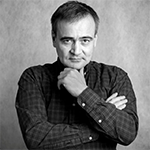
300 non-Spartans vs Vrublevsky
On October 27, the Khamovnichesky Court of Moscow announced the verdict, according to which Pavel Vrublevsky, the founder of the international processing companyChronoPay, was sentenced to 10 years in a general regime penal colony. According to the prosecution, in April 2019, Vrublevsky created a criminal group that operated until March 2022 and by fraud lured 437,500 rubles from 29 Sberbank cardholders. In addition, again according to the prosecution, during the same time, Vrublevsky and his accomplices simply stole 97,300 rubles from eight other Sberbank clients.
The court found it proved that Vrublevsky and four other members of the criminal group committed crimes, responsibility for which is provided for in part 4 of Article 159 of the Criminal Code "Fraud on an especially large scale", part 4 of Article 174.1 of the Criminal Code "Legalization of funds obtained by criminal means", part 2 of Article 187 of the Criminal Code "Illegal turnover of payment funds" and Part 4 of Article 158 of the Criminal Code "Theft committed by an organized group".
Established accomplices are also severely punished. They were sentenced to terms ranging from five to eight years in a general regime penal colony. Another member of the criminal group, who immediately after his arrest decided to plead guilty and made a deal with the investigation, was sentenced to three years in a penal colony last year.
This seemingly ordinary case begins to raise questions if you look a little more closely than the investigation at the motives of the perpetrators. For three years of criminal fishing, the Vrublevsky group stole about 540 thousand rubles from the bank cards of 37 Russians. This is about 180 thousand rubles a year or 15 thousand rubles a month for five people, 3 thousand rubles a month for each. It turns out that if these five did nothing at all, but went to the labor exchange and registered as unemployed, they would receive much more in benefits. What was their selfish intent?
However, the genesis of the case becomes much more clear if you remember who Pavel Vrublevsky is and whatChronoPayis like. I've already told you more than once, but I'll repeat myself. Netherlands, Amsterdam. It was in this city that 23-year-old Pavel Vrublevsky founded ChronoPay in 2003 ChronoPay.
In 2005, the company moved to Russia and rapidly became the leader in credit card payment processing in Russia, taking about a quarter of the market. By 2011, ChronoPay had offices in Moscow, Amsterdam and Barcelona, as well as in Florida and Riga. Two franchises have started operating in China. The company then employed more than 200 employees.
Back in the late noughties, before all the upheavals that befell Russia, Vrublevsky proposed creating a national payment system. His company sponsored the Russian Basketball Championship. And as a sponsorship only in the 2011-2012 season, it allocated $ 1.5 million for the development of basketball. At the exchange rate of that time, this is about 50 million rubles. The amount is large, but not for ChronoPay.
In 2010, Vrublevsky's company earned much more every month than it allocated as a sponsorship fee for the development of sports. Just in these years, inthe late noughties, the young Internet millionaire has already gained worldwide fame. Because the American journalist Brian Krebs, who specializes in computer security, wrote a lot about it.
Krebs wrote a weekly column oncybersecurity for The Washington Post. In December 2009, he retired from the newspaper and focused entirely on research and analysis of cyberspace, the results of which he posted on his blog. Every day, Krebs ' blog posts were read by up to a million people around the world.
In 2014, Krebs published the book "Spam Nation", which became a bestseller in the United States. Many pages of this book were devoted to the life story of the Russian businessman Vrublevsky.
Pavel Vrublevsky in an interview in 2019:
Brian Krebs had a nice tradition-he publishes one article about a person, and the person goes to prison. The whole world, informally speaking, knew. Two articles – a person goes to prison for a long time. Brian Krebs has published 28 articles and a book about me...
It is noteworthy that the accusations of Brian Krebs against Vrublevsky intensified at the very time when he was involved in a criminal case ona cyber attack on the Aeroflot ticket sales system.In this criminal case, Vrublevsky received a sentence, after which he was released in 2014.
Pavel Vrublevsky in an interview in 2019:
Somewhere in 2010-2009, under pressure, we conducted an internal investigation to find out what happened. We found out that the Mikhailov group was behind certain leaks, passed this information to the FSB's own security service, and passed this information to a number of heads of Russia's special services. And, in fact, after that they came under quite powerful pressure, part of which was the story related to Aeroflot, as well as publications about me abroadby blogger Brian Krebs.
And in 2016, Vrublevsky became a key witness in another criminal case - against FSB Colonel Sergei Mikhailov, the former deputy head of the FSB's Information Security Center, which investigates crimes on the Internet.
Brian Krebs also wrote about this case. In early 2017, Krebs posted a text on his blog in which he hinted that Sergey Mikhailov was allegedly one of his sources who passed him thousands of confidential documents oncyber departments in Russia.
In February 2019, the Moscow District Military Court confirmed that Pavel Vrublevsky was right. FSB Colonel Sergei Mikhailov was stripped of his officer rank, the Order of Merit for the Fatherland of the First degree, and sentenced to 22 years in a high-security penal colony under Article 275 of the Criminal Code, which provides for punishment forhigh treason. After the sentencing of Mikhailov and his associates, Vrublevsky said in an interviewwith CNN that Mikhailov's sentence is good news for both countries. These people are directly to blame for the cyber-hysteria that has engulfed the US and Russia, leading to accusations that Russia hacked the US election.
During the current trial in the Khamovnichesky Court of Moscow, already over Vrublevsky himself, he repeatedly stated that this criminal prosecution is nothing more than revenge for Mikhailov's comrades who remained at large.
Vrublevsky and his accomplices were arrested on March 11, 2022. The Ministry of Internal Affairs then cheerfully reported that it had neutralized a group of Internet scammers who had brought about 4 billion rubles into the shadow market over the past two years.
Federal TV channels reported on the major success of the Ministry of Internal Affairs. The report on the details of the devastating blow tocybercrime went to the presidential administration. The Interior Minister shared his pride in his subordinates with Russian President Vladimir Putin.
An official press release of the Ministry of Internal Affairs also appeared: "... more than 30 searches were conducted in homes and office premises in the city of Moscow, the Moscow, Vladimir and Voronezh regions. More than 100 pieces of servers and other computer equipment, over 350 thousand US dollars, 50 thousand euros and other items of evidentiary value were seized. 18 people were questioned as witnesses."
At the same time, in March 2012, a figure from the report to the presidential administration leaked from the Interior Ministry to the press that in this criminal case about 100 thousand victims of the actions of suspects. But by the time the criminal case was referred to the Khamovniki District Court in Moscow, 37 people out of 100 thousand victims reported by the Ministry of Internal Affairs were recognized as victims. Only five of them confirmed their testimony during the trial.
In general, at the exit, it turned out that three hundred operatives, investigators, and special forces soldiers of the Ministry of Internal Affairs, who participated in the largest special operation in the history of the Ministry of Internal Affairs, in simultaneous searches at 30 addresses in four regions of the Federation, actually just "ate a chizhik".
Already during the trial, it turned out that the victims of this criminal case did not apply to the district police departments or district police departments, but wrote a statement immediately addressed to the police Lieutenant General, head of the Main Department of Economic Security and Anti-Corruption Andrey Kurnosenko.
Here are just a few of their stories.
On January 30, 2020, 35-year-old Oksana, a resident of the Bashkir city of Tuimazy, who works as a lawyer, saw anadvertisement on VKontakte advertising the opportunity to earn extra money by participating in trading on the stock exchange. Oksana followed a certain link, deciding to join the exchange trading. To become a broker, the girl activated her personal account by transferring 2234 rubles and 40 kopecks to the specified account. Oksana traded successfully and earned $ 1,717 on the first day. But to withdraw this money from the trading platform, it was necessary to pay something like a commission of 5586 rubles and 56 kopecks. On January 9, Oksana went to an ATM, filled up her bank card and transferred 5,586 rubles and 56 kopecks.
From the protocol of Oksana's interrogation in the Tuymazinsk police:
"After that, I again received a request for depositing funds in the amount of 10 thousand rubles. But I have already guessed that fraudulent actions are being committed against me.Таким Thus, I suffered significant damage totaling 7820 rubles."
Oksana immediately wrote a statement to the head of the Main Department of Economic Security and Anti-Corruption of the Ministry of Internal Affairs, Lieutenant-General Andrey Kurnosenko.
26-year-old unemployed Damir, who lives in a village in the Ruzaevsky district of Mordovia, also wrote a statement addressed to Lieutenant General Kurnosenko.The guy won several thousand dollars on the Internet. But to withdraw this money from his virtual account to a bank account, he paid 22,718 rubles in three tranches. The guy lost this money, but he never saw his winnings.So Damir asked to find the scammers not just anyone, but personally Lieutenant-General Kurnosenko.
33-year-old Akulina, who lives in Yakutia, was on maternity leave. She didn't tempt fate by trying to earn extra money online. But on February 29, 2020, around 10 pm, the woman received an email to her email address. The letter said that she was entitled to tax deductions and commission payments. But to get them, you need to fill out a questionnaire. Akulina filled out a questionnaire, including her passport details, her bank card number and a three-digit code. On March 4, a woman discovered that unknown intruders stole 43,561 rubles from her card in thirty-five transactions for amounts ranging from 256 to 7,446 rubles.
And similar stories occurred in many cities of Russia.
The criminal case was initiated on April 13, 2020 in Samara. Then it was combined with other criminal cases. And in the end, it turned out to be in the production of the Department for the investigation of organized criminal Activities of the Investigative Department of the Ministry of Internal Affairs of Russia. And there they decided that the organizer of all these isolated crimes was Pavel Vrublevsky. Since all payments of victims were processed by ChronoPayChronoPay.
But what is interesting is that all transactions recognized as criminal, ChronoPay conducted as part of the provision of processing services to one of the Russian banks. ChronoPayAn agreement was concluded between the bank and ChronoPay, one of the points of which stipulated that in case of customer complaints, ChronoPay immediately returns the money. It is not the bank that returns it, but the ChronoPay company.
So, almost all the victims of the criminal case ChronoPaywere returned by ChronoPay all the money that was stolen from them. At the same time, the refund was made even before Vrublevsky's arrest, right after the victims of fraudsters applied to their banks with a statement about the illegal debiting of funds from their bank cards.
There is another interesting point in the criminal case. Judging by the materials at my disposal, the investigation initially assumed that Vrublevsky's criminal group consisted of at least 20 people.
On March 3, 2022, Major Morozov, an investigator for particularly important cases, signed a request to conduct searches. In this document, the police officer gave the exact number of people suspected of involvement in cybercrime. So he wrote that from the available data it follows that at least 20 people are involved in the crime or are aware of Vrublevsky's criminal activities, and that the apartments and houses of all these people should be searched. Because there are sufficient grounds to believe that these apartments may contain tools, equipment or other means of committing a crime, as well as other items, documents and valuables that may be relevant to the criminal case.
On March 5, 2022, the Tverskoy Court of Moscow granted a request to conduct searches at 20 addresses. And on March 10, around 6 a.m., three hundred police officers, SOBR, and OMON raided these same two dozen addresses in Moscow, the Moscow region, Vladimir and Voronezh regions. But, I repeat, by the end of the story, 100 thousand victims had shrunk to 37 people.
The billions put into shadow circulation, which the Ministry of Internal Affairs reported to both the country and the Kremlin, were also not confirmed. By the end of the trial, this became obvious to everyone who followed the development of events in the Khamovniki District Court in Moscow.
In January of this year, the judicial investigation of the Vrublevsky case in the Khamovniki District Court was completed. The debate took place. The defendants made the final statement. The last word of the last defendant remained. And then the judicial machine malfunctioned.
Since then, Federal Judge Marina LvovnaSyrova has scheduled regular sessions for nine months. But as soon as the defendants, their lawyers, the press and the audience gathered in the courtroom, the judge, having announced the continuation of the trial, immediately called a break. Often, meetings were not held at all, but simply postponed. Without explanation.
The court's confusion is, in principle, easily understandable. However, it would be strange to expect an acquittal due to the absence of a crime event. Otherwise, how to explain the senseless running around of three hundred employees of the Ministry of Internal Affairs in four regions of the Russian Federation? How can we justify the senseless shuffling of paperwork by dozens of prosecutor's and court officials, who have been approving charges and extending arrests dozens of times to those involved in criminal cases for almost four years?
The defeat of a large gang of criminals turned out to be a myth. But I repeat, the Interior Ministry even reported this myth as a fait accompli to the Russian president. With the verdict, federal judge Marina Syrova blurred the honor of the uniform of the security forces as best she could.
And we continue to monitor this process. Let's wait and see what the Moscow City Court will say to the appeal against this verdict.