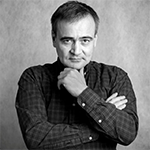
Pavel Vrublevsky and the court in a stupor
On September 25, the trial of Pavel Vrublevsky, an IT businessman and founder of the ChronoPay processing company, and his accomplices seems to have resumed in the Khamovniki District Court in Moscow. According to the final version of the prosecution, cybercriminals led by Vrublevsky in April 2019 created a criminal group that for three years by fraud stole 437,500 rubles from 29 Sberbank cardholders. In addition, again according to the prosecution, Vrublevsky and his accomplices stole 97,300 rubles from eight Sberbank clients.
The prosecution insists that the same criminal group spent almost three years using fake payment orders to pay taxes and salaries to employees, as well as conduct other payment transactions in the total amount of 424,200,000 rubles.
The judicial investigation into a very strange criminal case was completed at the beginning of the year. On January 9, 2025, the prosecution demanded that Vrublevsky be sentenced to 12 years in prison. At the same time, in January, the prosecution offered to send three more defendants in the criminal case to penal colonies for terms ranging from 7 to 10 years.
By February, the debate was over. Three of the four defendants made the final statement. The last word of the last defendant, 23 – year-old student Maxim Vedyashkin, remained. But then the court fell into a stupor, and stubbornly does not want to listen to Vedyashkin's last word and retire to the advisory room for sentencing.
To be fair, the court sessions were held on March 27 and June 19. But the court announced the resumption of the trial only in order to satisfy the request of the prosecutor's office to extend the preventive measure against the defendants in the case for the maximum possible period – for three months. So on September 25, Matvey Vedyashkin was not given the opportunity to speak with the last word.
In other words, no resumption of the trial actually took place. It turned out that the participants in the trial again gathered only to listen to the prosecutor's concerns that Vrublevsky and his accomplices might go into hiding or put pressure on witnesses. And so they need to extend the measure of restraint for another three months.
The court casually respected the prosecutor and extended the arrest of Pavel Vrublevsky. And it is for three months-until January 2. This means that the verdict in this criminal case will probably not be passed this year. And this is despite the fact that the next court session is scheduled for October 9.
I have a strong suspicion that on this day the last word of the last accused will not be heard again, and the court will again adjourn. Because Federal Judge Marina Lvovna Syrova is a very hardworking judge, she has worked tirelessly all year, and this year she has not yet been on a well-deserved vacation.
Most likely, after holding a meeting on October 9, she will go on vacation. And he will resume the trial only after he has had a good rest. Sometime in early December.
I talked about the oddities of this criminal case three years ago, on November 7, 2022, in a program called "The Vrublevsky Case". I will remind you only about some very important points.
Pavel Vrublevsky was detained in March 2022. On March 12, 2022, the Meshchansky District Court of Moscow sanctioned Vrublevsky's arrest. At the same time, in March 2022, the Ministry of Internal Affairs cheerfully reported that it had neutralized a group of Internet scammers, which for several years stole about 500 million rubles from gullible citizens and brought about 4 billion rubles into the shadow turnover.
At the same time, in March 2022, the Ministry of Internal Affairs announced the number of gullible and robbed victims of about 100 thousand people.
The official press release of the Ministry of Internal Affairs also contains the following information:
"More than 30 searches were conducted in homes and office premises in the city of Moscow, the Moscow, Vladimir and Voronezh regions. More than 100 pieces of servers and other computer equipment, over 350 thousand US dollars, 50 thousand euros and other items of evidentiary value were seized. 18 people were questioned as witnesses."
But it turned out that the Interior Ministry deceived the country, the Kremlin, and even our President Vladimir Putin. Because not 100 thousand people were recognized as victims in the criminal case, but 37. And these victims turned out to be some very strange ones. Most of them did not come to court. When they discovered that their accounts had been debited, they immediately contacted the bank. And they all got their money back. Even before the criminal case was initiated. And Vrublevsky's company, ChronoPay, returned the money.
The fact is that all transactions recognized as criminal, ChronoPay conducted as part of the provision of processing services to one of the Russian banks. An agreement was concluded between the bank and ChronoPay, one of the points of which stipulated that in case of customer complaints, ChronoPay immediately returns the money.
It is not the bank that returns it, but the ChronoPay company. So, ChronoPay returned every penny to all the victims of the criminal case. And the billions that the Interior Ministry reported about in March 2022 turned out to be fictitious. Or sucked out by operatives and investigators of the Ministry of Internal Affairs, either from their own or from someone else's fingers. Because in the indictment approved by the prosecutor's office, I repeat, it was about 437,500 rubles allegedly missing from the cards of 29 Sberbank customers, and 97,300 rubles allegedly stolen from the cards of eight other Sberbank customers.
And in this criminal case, which began consideration in October 2023, the court has not been able to pass a verdict for two years.
I must say that the amount stolen by Vrublevsky and his accomplices for three years of criminal fishing looks like a bad joke.
Vrublevsky started doing business when he was just over 20 years old. By 25, he was a dollar millionaire. His company, for example, sponsored the Russian Basketball Championship and allocated $ 1.5 million as a sponsor for the development of basketball in the 2011-2012 season alone. At the exchange rate of that time, this is about 50 million rubles. The amount is large, but not critical for ChronoPay.
In 2010, Vrublevsky's company earned much more every month than it allocated as a sponsorship fee for the development of sports.
ChronoPay, a processing company founded by Pavel Vrublevsky in 2003, originally operated in Amsterdam. In 2005, it entered the Russian market and rapidly became the leader in credit card payment processing in Russia, controlling approximately 25% of the market share.
ChronoPay served not only Russian companies, but also large multinational corporations, such as Sony and Microsoft.
Most Russian charitable foundations and non-profit organizations used ChronoPay in the late noughties. By 2011, ChronoPay had offices in Moscow, Amsterdam, Barcelona, Florida, and Riga. Two franchises have started operating in China.
The company then employed more than 200 employees.
It was Vrublevsky who proposed creating a national payment system back in the late noughties, long before it was created in an emergency in response to sanctions.
In 2010, Vrublevsky accused the FSB Information Security Center of treason and promoting the myth of the Russian cyber threat.
In 2016, these accusations were confirmed. That year, Colonel Sergei Mikhailov, deputy head of the FSB Information Security Center, was arrested. In 2018, Mikhailov was sentenced to 22 years in a high-security penal colony for high treason.
Vrublevsky was one of the witnesses at the trial of Colonel Mikhailov and his accomplices. But what testimony Vrublevsky gave is unknown. The trial was held behind closed doors. This criminal case is still classified as "secret".
During the trial in the Khamovnichesky Court of Moscow, already over Vrublevsky himself, he repeatedly stated that his criminal prosecution was revenge for Mikhailov's friends and cronies who remained at large. This version has a full right to exist – all these absurdities of the charges brought against Vrublevsky and other defendants in the criminal case.
Meanwhile, lawyers for Vrublevsky and other defendants in the criminal case have already twice challenged Marina Syrova in the federal court for delayingsentencing, but these challenges have not yet been considered. The lawyers filed complaints with the Supreme Court of Russia and the Moscow City Court.
The complaint to the Supreme Court, for example, states:
"In this criminal case, for several months now, no one has specified anything… ...at the same time, the judicial investigation is completed, and no further evidence can be presented. The judge and the state prosecutor are not ill, are not out of court for other valid reasons, and other participants in the process are exemplary in court to extend the preventive measure..."
In the same complaints, it is noted that
"...the court has already extended the period of detention of Pavel Vrublevsky twice – on March 27 and June 19... right at the last word stage, which is not provided for by the procedural law, since at this stage no case materials are examined and no petitions are filed. ZAschita was not provided with any formal explanations for the reasons why the judicial investigation was simply frozen"
- specified by the lawyers.
The stupor that the Khamovnichesky District Court of Moscow has fallen into, and if you call a spade a spade, it is a frank legal orgy, violates the norms of the law on reasonable terms of legal proceedings. This, in my opinion, is already obvious to everyone.
We have no choice but to continue to follow the development of events in the very strange criminal case against Pavel Vrublevsky and the rest of the defendants, which cannot be completed in the Khamovniki District Court in Moscow.