Cellmates
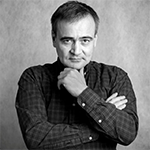
Ilshat Gafurov, former mayor of Yelabuga and former rector of Kazan University. Sergey Lipatov, former head of Transtelecom and former Chairman of the Board of Directors of Lokomotiv Football Club. Gafurov and Lipatov are people of the same generation.
Both received a good education in the USSR. Back in the Soviet years, they defended their PhD theses. After the collapse of the Soviet Union, both Gafurov and Lipatov did not miss the opportunities that the new time provided.
Gafurov defended his doctoral dissertation in the economic sphere. Lipatov became a Doctor of Law. Both Gafurov and Lipatov became successful public figures.
And at the turn of the century, both felt a threat to their career future and financial well-being coming from specific individuals. And they turned to the bandits with orders to eliminate these people. On August 28, 1999, in Moscow, in a parking lot near the market located in the CSKA sports complex on Leningradsky Prospekt, a hitman shot Yelabuga businessman and municipal deputy Aidar Israfilov by order of Gafurov.
On March 15, 2002, near the cottage village of Agrarnik near Odintsovo, by order of Lipatov, killers shot 52-year-old Igor Fominov, who in Soviet times served in the first main directorate of the KGB of the USSR, seconded to the USSR Embassy in the United States, and after returning to his homeland worked as the general director of the law firm In Yur Consult and a volunteer adviser to the first deputy Minister of Railways Vladimir Yakunin.
The murder of Israfilov was revealed only in 2021, when the bandits involved in the execution of the liquidation order began to give evidence. Gafurov was arrested on December 21, 2021. On May 28, 2025, the Savelovsky District Court of Moscow recognized Ilshat Gafurov's involvement in the murder as proven and sentenced him to 22 years in a high-security penal colony. On December 25, 2025, the Moscow City Court considered Gafurov's appeal and reduced the sentence to 18 years in a high-security penal colony. The former rector of Kazan University should be released in December 2039.
Ilshat Gafurov did not admit guilt, did not repent, and until the last moment tried to convince the court that he was stipulated that the key prosecution witnesses are people who have either already served time or continue to serve their sentences for participating in one of the bloodiest gangs of Tatarstan in the 90s, the 29th complex organized criminal group. Sergei Lipatov was arrested in April 2025. Initially, he also did not admit guilt, also insisting that he was slandered by members of the so-called special forces gang, which included officers of the Vityaz special forces of the Ministry of Internal Affairs, and who, in their free time, took orders for murder.
But after studying the testimony of gang members, after face-to-face interviews with the direct organizers and perpetrators of the murder of Igor Fominov, Lipatov realized that it was useless to deny further. In addition, Ilshat Gafurov has already been sentenced to 22 years in a high-security penal colony because his past achievements, awards, and promotions did not help him. It was after the verdict against Gafurov was announced that Lipatov pleaded guilty and repented.
As a result, the prosecution demanded 12 years in a high-security penal colony for him. Odintsovo City Court even showed humanism and sentenced him to only 10 years in prison. But let's go back to the events that have been taking place for more than two decades.
After the execution of orders for the murder of Aidar Israfilov and Igor Fominov, the careers of customers Ilshat Gafurov and Sergey Lipatov went up sharply. On December 19, 1999, the election of deputies of the State Council of Tatarstan was planned. Israfilov publicly announced that he intended to run for deputy in the same district as Gafurov and had good prospects for victory.
And in Tatarstan in those years there was an unwritten rule. Heads of administrations of cities and districts were required to pass through the sieve of elections to the republican parliament and only after receiving a deputy mandate could they be appointed to the post of head of a city or district. Israfilov's election victory could put an end to Gafurov's career.
But after the elimination of a serious opponent in December 1999, Gafurov calmly extended both the deputy mandate and the certificate of the mayor of Elabuga. And the fate of Gafurov turned out so that he worked as a city mayor for another 10 years, and in April 2010 he was appointed rector of Kazan University. In this position, he worked for 11 years.
KGB officer Igor Fominov retired after returning from a business trip to the United States and headed a law firm founded by Sergey Lipatov. Looking ahead, I can't help but say this. After the murder of Fominov, Vladimir Yakunin, then First Deputy Minister of Railways, who was questioned during the investigation, said that he met and became friends with Igor Fominov back in the late 80s, when they both served in the KGB.
Fominov at the USSR Embassy in the United States, and the future head of Russian Railways as first secretary of the Permanent Mission of the USSR to the United Nations. In February 2002, Yakunin was appointed First Deputy Minister of Railways, and he invited his old friend Igor Fominov to serve as a pro-bono human resources adviser. Quote:
“Trusting him as a competent and loyal specialist”.
During the interrogation, the protocol of which was announced in the Odintsovo City Court, Yakunin admitted that he avoided unnecessary contacts and, again, quote, closed representatives of big business on Fominov, thanks to which many personnel issues were resolved in the Ministry of Internal Affairs. Lipatov by that time already had a fairlylarge business tied up on Russian Railways, and conflicts began to arise with Fominov. Lipatov feared that his former employee would finally move under Yakunin's wing, taking up a full-time position in the Ministry of Railways and cutting off all his contacts with railway workers.
Lipatov decided to work ahead of time and order the elimination of Igor Fominov. Lipatov asked to find the perpetrator of the murder to his friend Leonid Rakogon, who at that time served as the head of the department of the 5th department of the OBOP of the Moscow Police Department. Lipatov offered 200 thousand dollars for the execution of the order.
Rakogon agreed, but kept 100 thousand dollars for organizational troubles, deciding that the performers could cope for 100 thousand dollars. With this proposal, the officer of the Ministry of Internal Affairs turned to Oleg Mikhalev, his former colleague in the RUBOP, who had joined the FSB in 2002. Mikhalev estimated his mediation efforts at 70 thousand dollars, and for the elimination of the adviser to the federal deputy Minister, he offered the remaining 30 thousand dollars to a soldier of the Vityaz special forces unit of the internal Troops of the Ministry of Internal Affairs, Alexey Chebotarev.
He did not bargain and agreed. And involved two more special forces in the crime. On March 15, 2002, the order to liquidate the adviser to the Federal Minister Igor Fominov was executed.
Chebotarev and his accomplices stopped the car in which the victim was returning from work. And they fired at least four shots at him. The bullet hit Fominov in the chest and punctured his lung.
He was able to reach his home, but died of blood loss before the ambulance arrived. An investigation began, which quickly faded. And this is despite the fact that the widow of the murdered man, Marina Takaeva, already in March 2002, told operatives that her husband had a conflict with Lipatov.
And that it is Lipatov she suspects of organizing the crime. However, during the official interrogation, Takayeva did not confirm her suspicions. As a result, the version of involvement in the crime of Sergei Lipatov in the spring of 2002 was dismissed as unpromising, because Lipatov at that time had quite a decent reputation.
He was born in 1962 in Leningrad. In 1987, he graduated from the Pyatigorsk Pedagogical Institute of Foreign Languages. In 2006, he graduated from the Chicago Graduate School of Business. Doctor of Law, Candidate of Economic Sciences.
In 1988, he went into business. In 1999, he became Deputy Head of the Financial and Economic Department of the Federal Tax Police Service of Russia. In 2001, he managed to work as a representative of the city of Sochi in Moscow.
In the rank of deputy head of the city administration. In early 2002, he returned to business. And in February 2002, his subordinate Igor Fominov became a volunteer adviser to the First Deputy Minister of Railways.
Fominov worked in this position for a little more than a month. As I said earlier, he was shot on March 15, 2002. They were able to solve this crime only in 2025, when a retired lieutenant colonel of the Ministry of Internal Affairs, a former soldier of the Vityaz special forces, Alexey Chebotarev, was arrested.
Chebotarev did not deny it and concluded a cooperation deal with the investigation. Thanks to his testimony, another 18 members of the special forces gang were arrested, which turned out to have more than 40 contract murders. Among the accomplices of numerous crimes named by Chebotarev was Oleg Mikhalev, who by that time had already managed to become a pensioner of the FSB.
And it was Mikhalev who gave the money to Chebotarev. Mikhalev also did not deny it, providing information that he received money for the removal of Fominov from Leonid Rokogon. In turn, the retired colonel of the Ministry of Internal Affairs Rokogon at the next bet with Lipatov told such details of receiving the order, confirming the execution and transferring the money that no one had any doubts that it was Lipatov who ordered the murder of Igor Fominov.
On June 30, 2025, the Pushkin City Court of the Moscow region sentenced Alexey Chebotareva to 15 years in a high-security penal colony for 12 murders committed in the early noughties. And in September 2025, a special forces lieutenant colonel who went through two Chechen wars went to the SVO as part of an assault battalion, signed a contract with the Ministry of Defense and went to the war zone, and FSB pensioner Oleg Mikhalev, who was sentenced to 8 years in a penal colony for aiding in the murder of Igor Fominov. Retired Interior Ministry colonel Leonid Rokogon was also sentenced to 8 years in prison for complicity in the murder.
But let's go back to Sergey Lipatov, whose career, as I said before, took off dramatically after the murder of Igor Fominov. Here I must say that Fominov, most likely, was not going to slander and whisper something bad about Lipatov to Vladimir Yakunin. Already in 2002, shortly after the murder of Fominov, Lipatov became the head of Transtelecom CJSC.
It is a wholly owned subsidiary of Russian Railways, one of the largest telecom operators in Russia, operating a fiber-optic network along railways. On March 9, 2004, the Ministry of Railways was liquidated. On June 14, 2005, Vladimir Yakunin was appointed President of Open Joint Stock Company Russian Railways.
And shortly after this appointment, Yakunin instructed Lipatov to take over the patronage of the Lokomotiv football club. At the beginning of the noughties, Lokomotiv football club was a top Russian club. In 2002 and 2004, the club won the title of champions of Russia.
In 2007, he added to his trophies by winning the Russian Cup. And at the end of 2005, Sergey Lipatov joined the team, who headed the Board of Directors of the football club. And the bacchanal began.
Lipatov wanted to destroy in a couple of years what had been created for decades. Football experts and well-known sports commentators threw up their hands, wondering how Lokomotiv so quickly turned into a hornet's nest.
Excerpt from the documentary "The Battle for Lokomotiv":
Intrigues, scandals, and investigations.
In just a few years, the club, which was famous for its family atmosphere, has turned into a hornet's nest, where neither players, fans, nor its history are valued. I really don't know.
At the same time, the club's budget exceeded $ 100 million. Lipatov fancied himself a major football specialist, almost buying bundles of football players. Mostly legionnaires.
Excerpt from the documentary "The Battle for Lokomotiv":
In his youth, Sergey Vladimirovich did not take place as a football player, so he decided to play football manager, such as Abramovich in Chelsea. Only the money doesn't come from his pocket. On paper, everything is simple.
We say goodbye to older players, give way to the young and promising ones, and buy up good foreign players from above. Well, you understand. A la in attack on wider, in defense on narrower.
If earlier a bet was made on the backbone and point strengthening, for example, in 2003 Lokomotiv signed 6 players, four of whom were Gurenko, Khokhlov, Sychev and Nigmatullin, now compare it with this list. 16 people, 12 of them legionnaires, and 9 now will not remember even the fans of the red-green. Now imagine, everyone speaks different languages.
Some people want to play more, some don't want to play at all. The backbone is not happy, a mess and a conflict on the conflict.
Scandals were fueled because of the maximum amount of bonuses that Lokomotiv players received under Sergei Lipatov.
In the summer of 2007, the bonus scandal reached an international level. This happened after Lokomotiv's legionnaire, Scotland striker Harry O'Connor, in an interview with the Guardian newspaper, shared the figures of his salary and bonus at Lokomotiv. Literally:
Of course, money was the main factor that motivated me to join Lokomotiv. I was getting 2,000 pounds a month. And this is also tax-free.
At Lokomotiv, I was offered 16 thousand pounds a week. More than 32 thousand dollars. And it's clean.
My coach told me you are my best player and I don't want to let you go. But you have to think about your future and your family. If you stay there for a couple of years, you'll be able to provide for yourself for the rest of your life.
And so it happened. In the little over a year I've been there, I've filled up my bank account pretty well. I bought several expensive cars and invested decently in real estate.
There was a fantastic salary, and the bonuses were so simply admired. If we won the Derby, which is 14 out of 30 matches in the season, then the bonus for such a victory was 100 thousand pounds. In May, we won the Russian Cup.
For this victory I received 250 thousand pounds. By the way, I bought a brand-new Ferrari for this award. This is what I dreamed of as a child.
In general, during my stay in Russia, I also bought a Hummer, and in addition, I bought a very good car for my wife. But the money didn't turn our heads, so we decided to go back. Money doesn't decide everything in life.
End of quote.
It was then that it became known that Lokomotiv players received awards almost after every victory. At the same time, these were not penny bonuses, but amounts estimated in the tens of thousands of dollars.
And in envelopes, in cash, clean, without paying taxes. But stray money did not help the players to show a stable game. The club rapidly degraded.
And Lipatov was quietly removed from the post of a football functionary, and at the same time released from the hassle of managing Transtelecom. Lipatov switched to the construction and banking business, becoming a member of the Board of Directors of Mezhtransbank. In January 2016, the bank's license was revoked due to its highly risky credit policy and questionable transit operations in large volumes.
During the investigation of the circumstances of the bank's bankruptcy in November 2017, Sergei Lipatov was arrested and sent to a pre-trial detention center, having been charged with embezzlement of 4 billion rubles. But the investigation failed to collect the necessary evidence of Lipatov's involvement in this crime. He was released from custody, and the criminal case was closed.
But today I have every reason to assume that in 2017 Sergey Lipatov avoided a prison sentence for embezzling 4 billion rubles precisely because of football. The fact is that by the time of Lipatov's arrest in the Mezhtrastbank case, law enforcement agencies had in their hands the testimony of Pyotr Chuvilin, a well-known Russian banker who died on February 27, 2023. Despite the fact that Chuvilin passed away three years ago, the interrogation protocolsof Petr Yurievich are still being read out in criminal trials on shadow cashing and converting amounts estimated at tens of billions of dollars, which are better known both in Russia and abroad as the case of the Moldovan "Landromat".
So, by the time of Lipatov's arrest, the investigators in the Landromat case had Chuvilin's interrogation protocol at their disposal, in which it was written in black and white that in 2005-2009 Sergey Lipatov was one of the largest clients of Landromat. We started to sort it out, and the information was confirmed. Operatives and investigators found out that the Moldovan "Landromat" was used not only by "Locomotive".
Other football clubs also did not disdain to use cash receipt schemes to pay bonus players and pay for football transfers. But it was autumn 2017. The World Cup in Russia was just over six months away.
No one wanted a huge scandal in Russian football related to the payment of shady bonuses. In general, in 2017, in the case of Mezhtrastbank, Lipatov was released from the pre-trial detention center. The role of football cash flows in the Moldovan "Landromat" decided to quietly forget.
However, shadow money in football transfers and player bonuses is a separate story, which we may return to later. And Lipatov was again in a prison cell in May 2025. On February 28, 2026, the Odintsovo City Court found Sergei Lipatov, the former head of the Lokomotiv football club and Transtelecom, guilty of incitement and complicity in murder and sentenced him to 10 years in prison.
The verdict has not yet entered into force. Lipatov is not going to appeal the already humane court decision, but he also expects to avoid being transferred to a penal colony. Because he applied to the Ministry of Defense with a request to conclude a contract with him and send him to the combat zone in the SVO.